Catalog quality, measured continuously.
For catalogs that change every week. New SKUs arrive with gaps, supplier feeds overwrite good content, and AI shopping agents re-read your catalog all the time, so a score taken once goes stale. The CatalogIQ platform re-scores your published catalog, the pages Google and AI agents actually read, every 30 days and shows where quality is slipping, product by product. No install and no PIM migration: it works alongside your PIM.
Under 5,000 public products and want a one-time check? Run the free preview instead →
A catalog that turns over needs quality measured continuously
Catalog quality monitoring means re-scoring the published catalog on a schedule, so you see which products slipped, which fixes landed and what's new before shoppers or AI agents notice.
New SKUs arrive with gaps
Every launch adds products with missing identifiers, thin descriptions or no attributes.
Supplier feeds overwrite good content
A feed update can quietly replace the copy and specs your team already fixed.
Seasonal drops change the mix
New categories bring new attribute requirements your old products never needed.
Agents re-read all the time
AI shopping agents and marketplaces read what's published today, not what you fixed last quarter.
“All products expire from your Merchant Center account 30 days after the last refresh.”
Accounts warned for product data quality issues have 28 days to fix them before items are disabled from free listings and Shopping ads.
One engine, every product, on a schedule
The same engine and standards as the one-time report, run against your whole catalog every 30 days. Screens below show sample data, with store names changed.
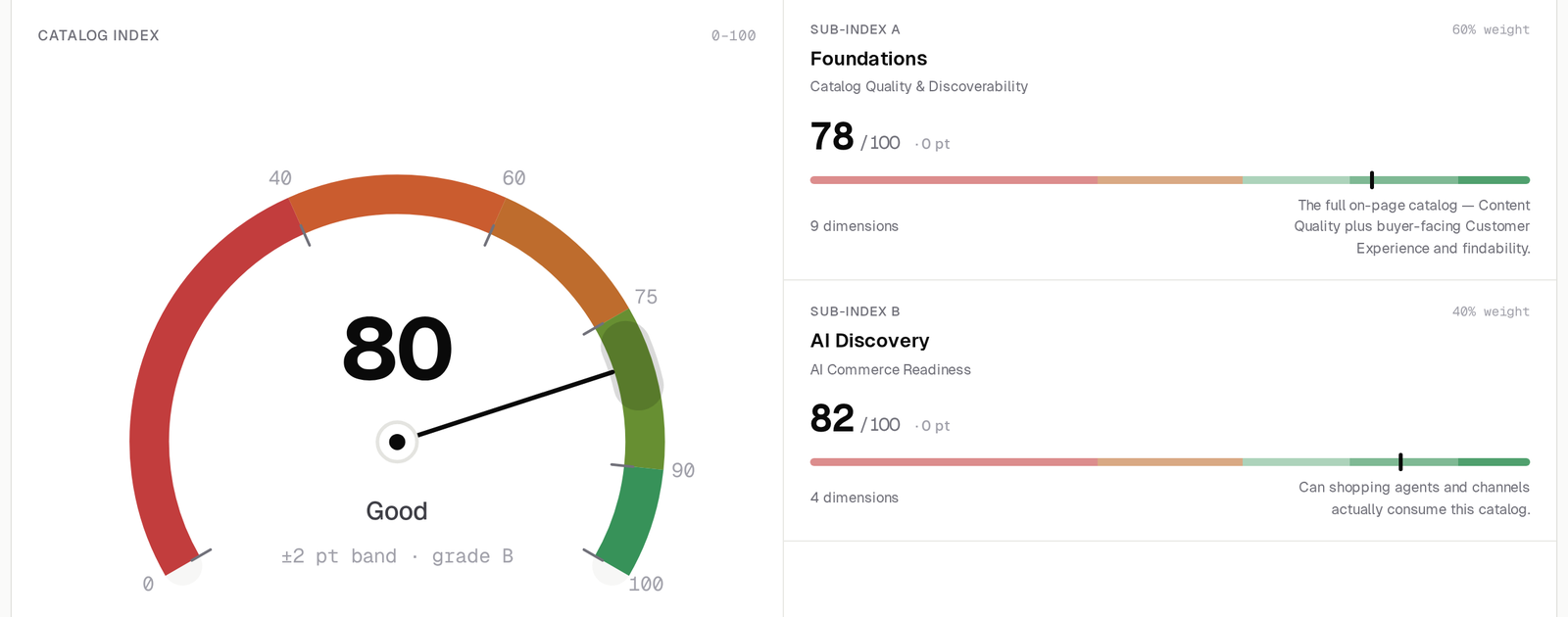
One index, and how it moved
The CatalogIQ Index with its two sub-indices, Foundations and AI Discovery, and the change since your last scan. Headline problems sit underneath, so the first screen tells you what changed and what to do next.
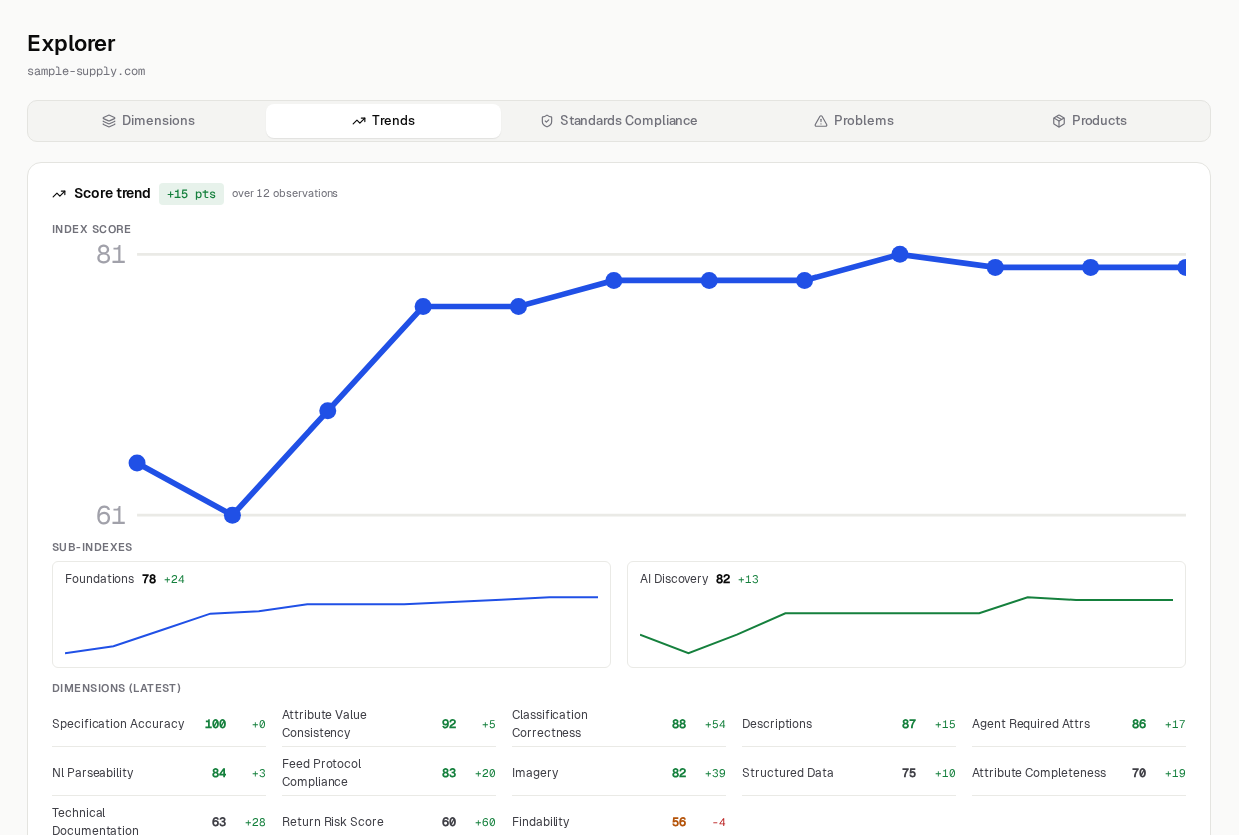
A 12-month trend
Score, problem counts by severity, and standards coverage, charted scan over scan. You see whether quality is improving, where it slipped, and whether last month's fixes held.
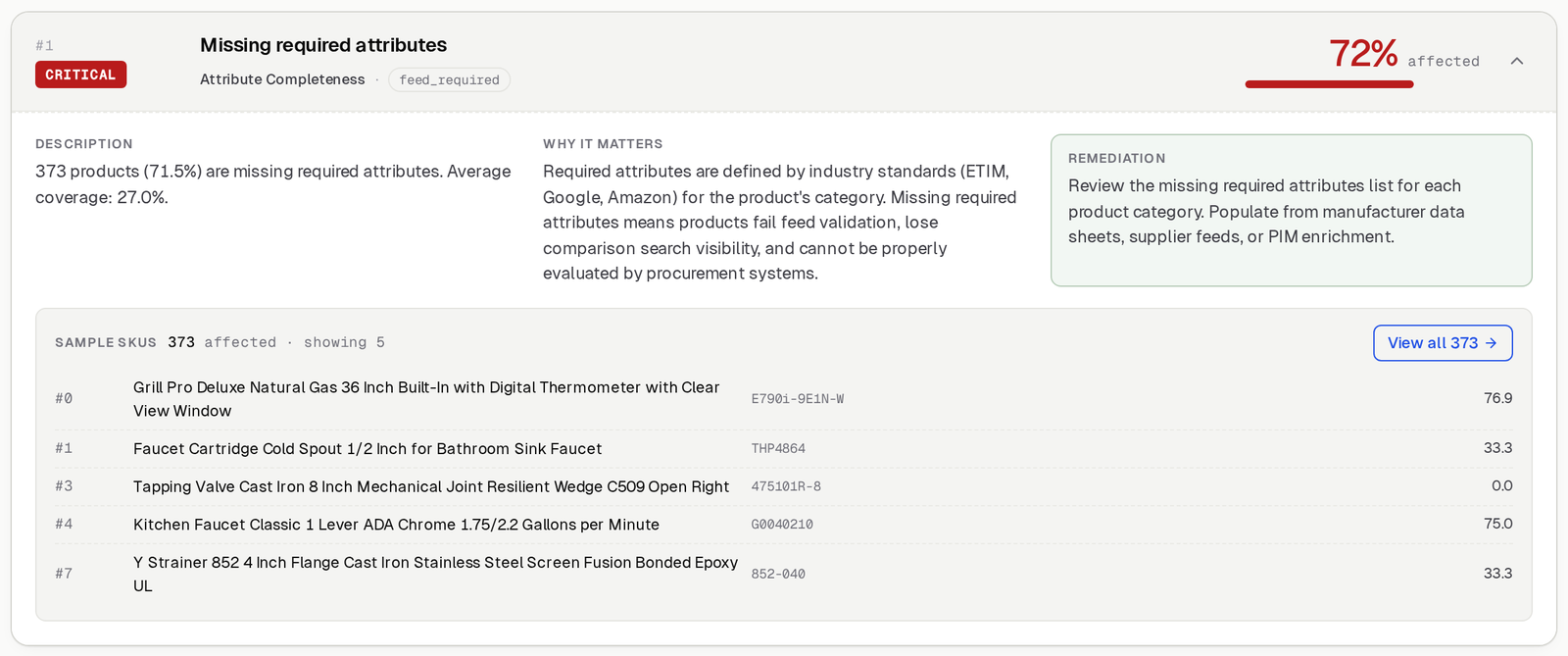
Problems, ranked, with the fix
Every problem ranked by severity, with why it matters, how to fix it, and the products it affects. Filter by dimension and jump straight to the affected products.
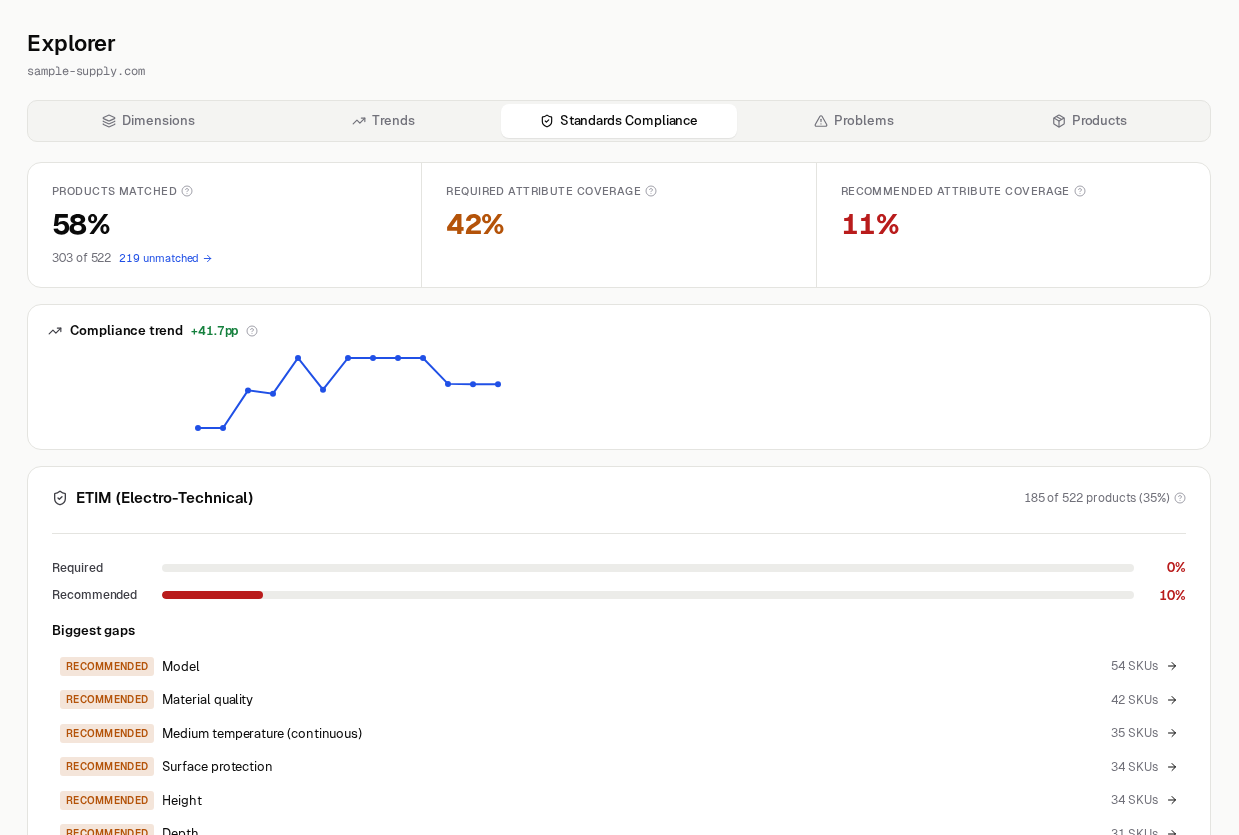
Coverage by standard
Attribute coverage against ETIM, GS1 GPC, Google, Amazon, UNSPSC and eCl@ss: the share of products matched, required and recommended attribute coverage, and the biggest gaps by standard and category.
Every product, one click deep
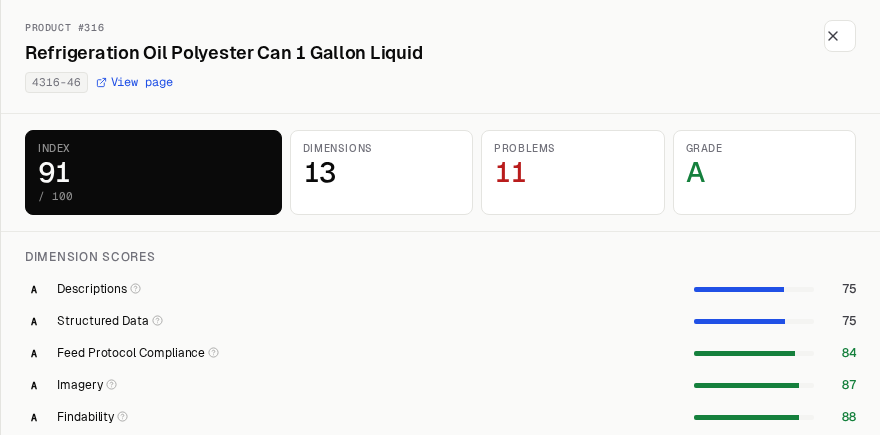
Search and sort the whole catalog. Open any product to see its dimension scores, its problems, the specs it publishes, and the attributes it's missing.
Your whole catalog, wherever it lives
The platform scores your public product pages, a product feed you send as CSV, or both. Catalogs behind a dealer login are crawled with credentials you store, encrypted at rest. Nothing to install on your store, and no PIM migration.
Which is right for you
A diagnosis is a one-time job. Monitoring is a different job, for catalogs that change every week. Same engine, same standards.
The Catalog Quality Report
One-time, self-serve, up to 5,000 public products. Free preview first, then $99 or $199. A per-product fix list you hand to whoever manages the data.
The CatalogIQ platform
Ongoing, quoted to your catalog. Over 5,000 products, several sources, behind a login, or changing every week. Re-scored every 30 days, with a 12-month trend.
Tell us about the catalog and we'll quote it
There is no list price for the platform: catalog size, sources and setup change the effort. Our team will respond within one business day.